
How the Philippine Embassy OEC Process Works in Singapore
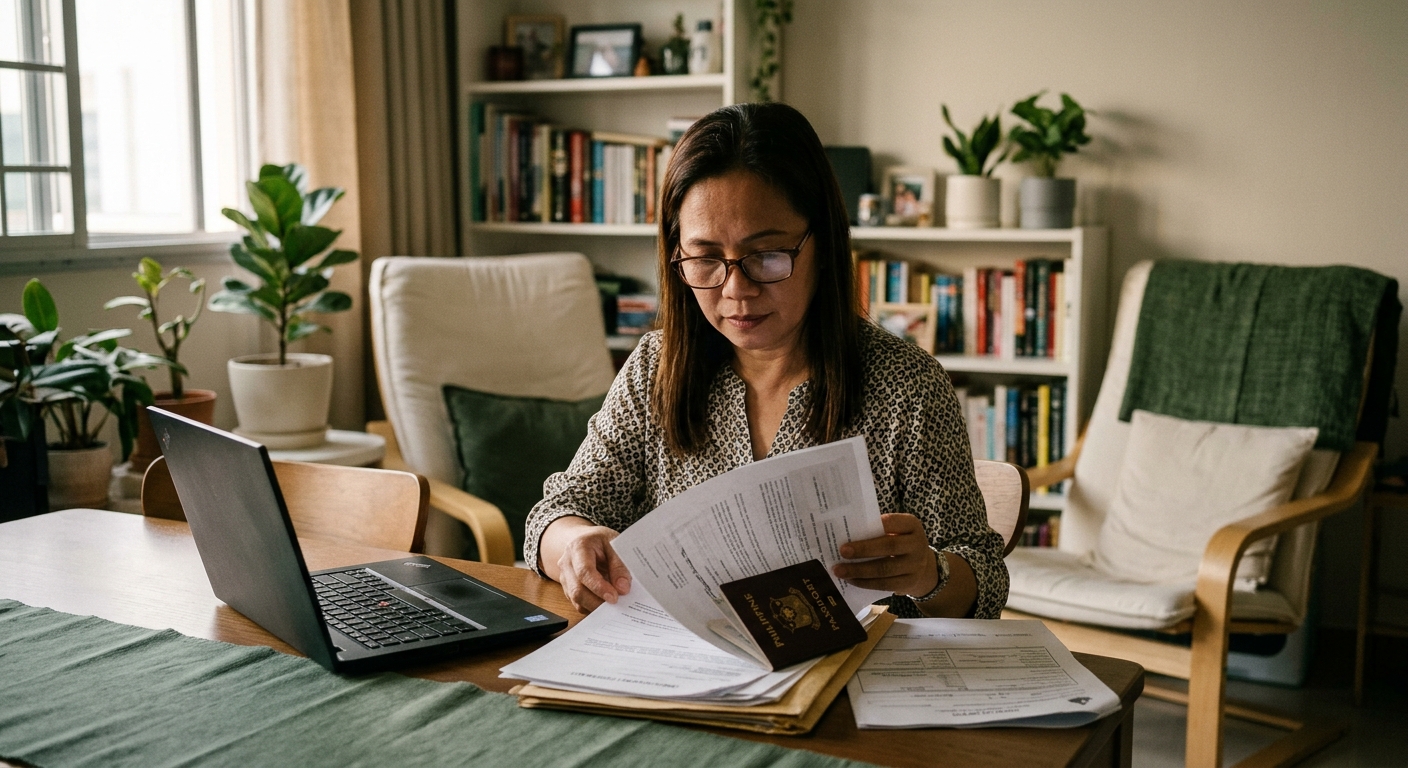
Many Singapore families only hear about the OEC when travel plans suddenly become stressful: your helper is flying home, returning after home leave, or meeting you overseas—and someone mentions she may be stopped at the airport without the right paperwork. This is where understanding how the Philippine Embassy OEC process works for helpers in Singapore becomes genuinely useful. It is not just an “extra document”; it is part of the Philippines’ system to protect Overseas Filipino Workers (OFWs) and regulate overseas employment.
In practice, the OEC journey touches several entities: DMW (Department of Migrant Workers), the Philippine Overseas Labor Office (POLO) in Singapore (often associated with the Philippine Embassy for consular matters), your helper’s recruitment history, and your own compliance as an employer under Singapore’s MOM regulations. The good news: when your helper’s documents are in order and you plan early, it is usually manageable.
What an OEC is, and why it matters for helpers
An Overseas Employment Certificate (OEC) is an exit clearance and proof of overseas employment issued by the Philippine government. For Filipino domestic helpers, the OEC is commonly required when leaving the Philippines to work abroad, and it can also be required for certain travel scenarios when returning to the Philippines and re-entering Singapore.
Why the Philippines requires an OEC
The OEC functions as:
- Proof the worker is properly documented as an OFW
- A protective mechanism to reduce illegal recruitment and trafficking
- A way to ensure the worker has coverage and benefits tied to overseas employment
Families sometimes ask whether this is “Singapore’s requirement.” It is not. Singapore’s Ministry of Manpower (MOM) focuses on work permit rules, insurance, rest days, salary payments, and safe employment practices. The OEC is primarily a Philippine government requirement.
When it becomes a real issue for Singapore employers
You are most likely to encounter the OEC process when:
- Your helper travels to the Philippines for home leave and needs to return to Singapore smoothly
- Your family and helper are travelling together and your helper is returning from the Philippines to Singapore
- Your helper is newly hired and coming from the Philippines (this is typically arranged through licensed channels)
If you are hiring and want to avoid “surprises,” start with a properly documented candidate. You can browse our helper directory or start a hiring application so our team can guide you on the correct deployment pathway.
Who typically needs the OEC (and common exceptions)
A practical way to think about how the Philippine Embassy OEC process works for helpers in Singapore is to focus on the helper’s status and travel direction.
Helpers returning to Singapore after home leave
If your helper is an OFW documented under the Philippine system and is travelling from the Philippines back to Singapore, she will typically need an OEC or an OEC exemption, depending on her profile and eligibility. This is where families sometimes run into trouble when flights are already booked.
New hires coming from the Philippines
For first-time deployment, the OEC is generally part of the overseas employment documentation managed through the appropriate licensed recruitment and Philippine-side processing. From a Singapore employer’s perspective, it is best handled through a reputable agency partner to ensure compliance and avoid deployment delays.
Transfers, direct hires, and “complicated histories”
Some cases need extra care:
- The helper previously worked in another country and has documentation that must be updated
- The helper changed employers and her records require alignment
- The helper’s prior deployment route was not properly recorded
If your helper’s situation is unusual, speak with a consultant early. You can reach us via contact our consultants and we will advise what is typically needed, and when you should factor in additional lead time.
How the Philippine Embassy OEC process works for helpers in Singapore (step-by-step)
The exact steps can vary based on your helper’s documentation and DMW requirements at the time, but the workflow below reflects how the process commonly functions for helpers connected to Singapore.
Step 1: Confirm the helper’s employment and travel scenario
Before any appointment is made, clarify:
- Is she renewing or updating overseas employment records, or applying for an OEC tied to her current employer?
- Is she returning to Singapore after home leave, or is this a first-time deployment?
- Is the employer the same as what is reflected in her records?
This matters because mismatches (employer name, employment category, or contract details) can trigger rework.
Step 2: Prepare key documents (helper and employer)
Document checklists change, but typical items include:
- Helper’s passport and relevant identification
- Singapore work pass details (e.g., Work Permit / IPA-related documents depending on scenario)
- Employment contract / standard employment terms
- Proof of employer identity (e.g., NRIC/FIN details) if requested in certain processes
- Travel itinerary if relevant
From a Singapore compliance standpoint, also ensure your MOM-related items are in order (valid Work Permit, insurance coverage, and any required approvals). MOM rules govern her legal right to work in Singapore, while the OEC governs her OFW clearance/exit documentation under the Philippines.
Step 3: Contract verification (where required)
For many OFW processes, contract verification is a key step. In Singapore, this is often associated with POLO/DMW processing connected to the Embassy’s ecosystem. Contract verification is intended to confirm that terms meet required standards.
Families often worry that this means rewriting everything. Usually, it means ensuring essential information is clear and aligned with what is acceptable for overseas domestic work documentation.
Step 4: DMW/POEA systems steps and appointment flows
Historically, many Filipinos refer to “POEA,” but the relevant authority today is DMW. The online system flows and required registrations can change over time. The important point for employers is: your helper may need to complete online steps and attend an appointment, and the timeline can be affected by demand.
Practical tip: Avoid leaving this to the last week before travel. Peak periods (school holidays, year-end travel, long weekends) can create bottlenecks.
Step 5: Issuance of OEC or proof of exemption
Depending on eligibility, your helper may receive:
- An OEC, or
- An exemption confirmation (for qualifying returning workers in specific circumstances)
Either way, the objective is the same: reduce the risk of boarding or immigration issues when travelling.
Step 6: Travel and re-entry planning
Even when the documentation is approved, smooth travel also depends on:
- Ensuring passport validity is sufficient
- Ensuring Singapore Work Permit validity and re-entry conditions are satisfied
- Aligning travel dates with any approvals or appointment timings
If your helper is travelling through Manila or other airports, she may be asked to present documentation at points of departure.
Timelines, costs, and planning around home leave
Families often ask for exact durations. In reality, timelines vary based on the helper’s documentation history, appointment availability, and whether there are mismatches to correct.
A realistic planning window
As a conservative rule of thumb for home leave planning:
- Start checking requirements well before booking flights if possible
- Build buffer time for appointments, system updates, and rework
If you already booked flights and you are worried, do not panic—but act quickly. We have seen families resolve issues with proper prioritisation, but last-minute cases have less flexibility.
Budgeting considerations
There may be fees tied to government processing, contract verification, and related steps. These are not “agency invented” items—they are part of the formal process. Your helper may also incur costs such as transport and time off if appointments fall on workdays.
As an employer, the most important cost is often the indirect one: flight changes if the paperwork is not ready.
Common pitfalls Singapore families should avoid
When people search how the Philippine Embassy OEC process works for helpers in Singapore, they are usually trying to avoid a bad surprise. Here are the issues we see most often.
1) Leaving it too late
The single biggest problem is time. Embassy/DMW-related processes can be appointment-based, and appointment slots can fill up.
2) Employer name or contract details not matching records
If the helper’s DMW record shows a different employer or different employment details, updates may be required.
3) Confusing MOM requirements with Philippine requirements
MOM compliance (Work Permit validity, insurance, rest days) does not automatically mean the helper’s OFW record is ready for travel. They are separate compliance tracks.
4) Assuming “all helpers don’t need OEC now”
Rules around exemptions and implementation can change. Always confirm based on your helper’s situation and current guidance.
5) Poor coordination during peak travel seasons
Year-end travel is common. So is travel around Hari Raya, Chinese New Year, and the June/November school holidays. Plan earlier than you think you need.
Practical guidance for employers: what you can do (and what you shouldn’t)
Singapore employers sometimes feel they have no control over the process. You do have influence—mainly through planning, paperwork discipline, and clear communication.
What you can do as a responsible employer
- Keep a clean digital folder of your helper’s key documents (passport biodata page, Work Permit details, employment terms)
- Encourage early discussion when your helper wants to go home
- Align expectations on timelines and avoid last-minute flight bookings
- Ensure your helper can attend appointments if needed
A simple numbered checklist that helps many families:
- Discuss intended travel dates at least 6–8 weeks ahead when possible.
- Confirm Work Permit validity and any MOM-related constraints.
- Ask the helper to check her DMW record status and what her next step is.
- If there are mismatches, resolve them before buying non-refundable flights.
What you should not do
- Do not rely on verbal assurances from friends or social media that “no need anymore”
- Do not ask your helper to take shortcuts with documentation
- Do not ignore signs of documentation mismatch (different employer name, wrong job category)
If your helper needs in-person help in Singapore
Some helpers seek assistance around Lucky Plaza and Orchard where there are many Filipino services and community networks. These can be helpful for general guidance, but official requirements still come from DMW/POLO/Embassy channels. For families, it is best to verify information carefully and use reliable sources.
How hiring through a proper channel supports smoother OEC outcomes
The easiest OEC cases are usually those where the helper’s employment history and documentation have been handled cleanly from the start.
At Happy Home Agency, we work with families to reduce downstream issues by focusing on fit and documentation readiness. Our matching approach, Precision Match™, helps you select a helper whose experience fits your household needs, while our process discipline helps ensure paperwork and timelines are handled responsibly. After placement, our 365-Day Employer Care™ is there to support you if employment administration questions arise.
Where this matters most
- First-time employers who are not familiar with OFW documentation
- Families hiring a helper with a complex employment history
- Families planning frequent travel who want fewer last-minute surprises
If you are still deciding who to hire, start with our services or view our helper directory. If you are ready, start a hiring application and our consultants will advise the best pathway.
Frequently asked scenario: helper going home and returning to the same employer
This is the most common real-life scenario for Singapore employers.
What usually goes smoothly
- Same employer, clean record, updated contract details, and adequate time to complete steps
What often causes delays
- Work Permit nearing expiry around travel dates
- Changes in employer particulars not updated in records
- Missing confirmations or unclear documentation
A sensible planning approach
- Confirm travel dates and ensure Work Permit validity covers re-entry
- Ask the helper to confirm whether she expects an OEC issuance or an exemption pathway
- Keep buffer time for appointments and unexpected corrections
If you want more practical employer guidance beyond the OEC topic, browse other guides for Singapore-focused tips on managing and supporting a helper fairly.
Making the Right Choice
Understanding how the Philippine Embassy OEC process works for helpers in Singapore is ultimately about being a prepared, responsible employer—so your helper can travel safely and return to work without unnecessary stress for your household.
If you are hiring a Filipino helper and want guidance from the start, or if you already employ a helper and want to sanity-check your travel paperwork plan, reach out to us. You can start a hiring application or contact our consultants (WhatsApp available) and we will walk you through the practical steps and timelines based on your situation.
Questions & answers
Let Happy Home Agency match your family with someone you can trust.
Since 2006, we've helped Singapore families find the right helper — not just any helper. EA Licence 06C4290.
Related articles
Hiring a Filipino helper in Singapore involves clear MOM rules, Philippine Embassy processes, and practical fit checks at home. Here’s a complete, family-first guide.
Considering a Filipino helper in Singapore? Learn the step-by-step hiring process, expected costs, MOM rules, OEC basics, and practical tips to match your household well.
Hiring a helper starts with the right MOM steps. Learn how the MOM work permit for domestic helper works, what you must prepare, and common pitfalls to avoid.